








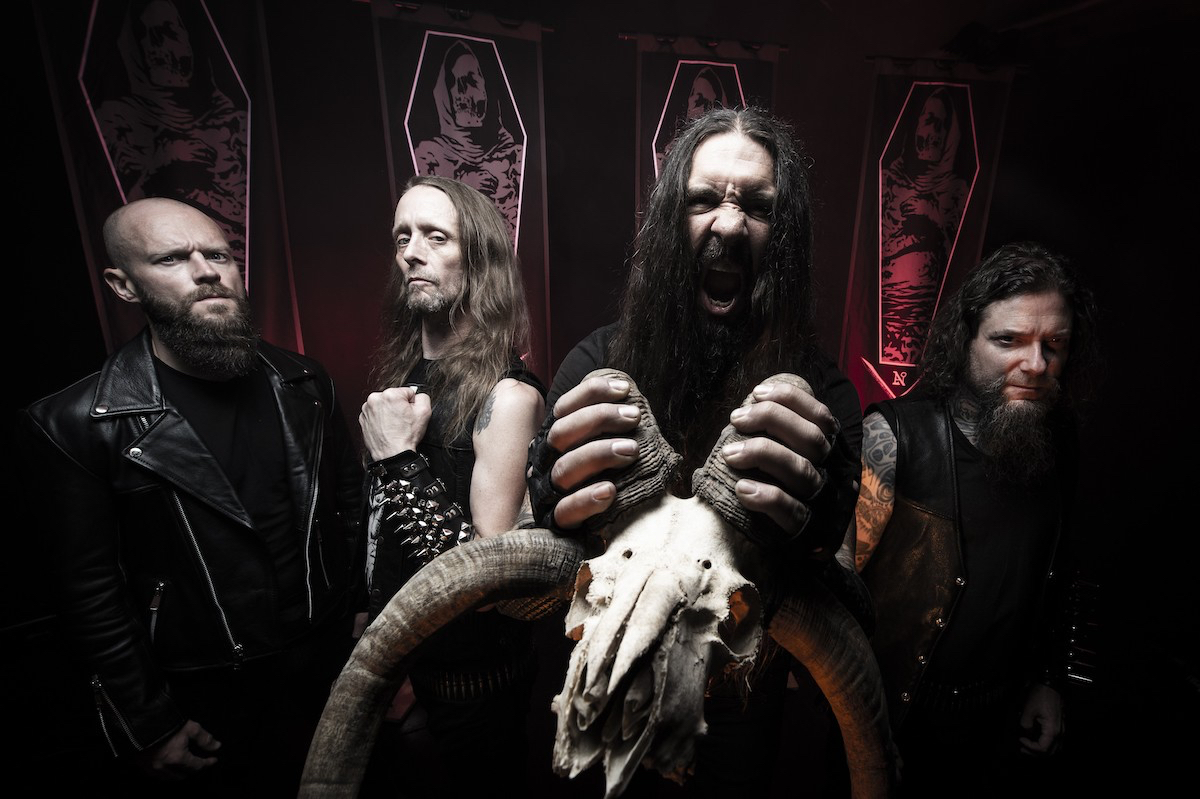
GOATWHORE
Recording Lineup:
Louis B. Falgoust II: Vocals
Sammy Duet: Guitars, Vocals
Zack Simmons: Drums
James Harvey: Bass
Touring Lineup:
Louis B. Falgoust II: Vocals
Sammy Duet: Guitars, Vocals
Zack Simmons: Drums
Robert “TA” Coleman: Bass
“We wanted it raw. We wanted it organic. We wanted it to sound the way we do in the live setting,” relays Goatwhore frontman Ben Falgoust of the band’s latest output, Vengeful Ascension. Their seventh full-length and second recorded reel-to-reel, Vengeful Ascensionwas captured at Earth Analog in Tolono, Illinois (near Champaign, Illinois) with longtime soundman and comrade Jarrett Pritchard (1349, Gruesome), breaking a four-album tradition of working with Erik Rutan.
“Working with Rutan was awesome. We did some great records with him,” Falgoust is quick to point out. “But you come to a point where you’re like, ‘All right. Let’s try something new.’ It was part of trying to remove ourselves from a comfort zone and a risk thing we needed to take. Plus, we really wanted to hit the essence of where we are live and what better way to harness that than by having our live sound guy involved. Jarrett is knowledgeable with the studio stuff. He also knows how we sound coming out of a PA and we really wanted to get closer to that. Pritchard really focused on that live aspect from every members’ perspective and I think he pushed us out of our personal comfort zones. He really understands our vision.“
The resulting ten-track, forty-one-minute production – mixed by Chris Common (Tribulation, Pelican) and mastered by Maor Applebaum (Faith No More, Halford, Today Is The Day) – marches in, clutches its listeners by the throat and refuses to loosen its grip until the abrupt conclusion of “Those Who Denied God’s Will.” A sonic manifestation of war, chaos, desolation, and emotional conflict, seamlessly bridging twenty years of the band’s signature brand of audio venom, it’s a record that finds its members at their most accomplished both individually and as a cohesive unit. Guitarist Sammy Duet’s dense, sub nuclear riff work and possessed solo blitzes are at their most devastating spiraling flawlessly and instinctually around drummer Zack Simmons’ and bassist James Harvey’s hammering rhythms while Falgoust’s distinctly commanding roar, his acidic prose more enunciated than ever before, complimenting the apocalyptic proceedings.
“I think every song on this record is pretty fucking strong,” the frontman reflects. “Each song is a representation of Goatwhore. from day one until now. It really shows our evolution as a band. I don’t think that this band has reached its peak yet. I mean, I think we’re closer now than ever but we’re still growing; we’re still evolving.“
While hardly a concept record in the traditional sense, Vengeful Ascension loosely revolves itself around Luciferian notions in title and spirit where the symbol of Lucifer serves not as a fiendish, all-destroying demon but rather an emancipator or guiding light. It’s a theme of struggle and transcendence derived from John Milton’s Paradise Lost epic and one that has appeared, whether directly or indirectly, within Goatwhore works of the past.
“There’s that whole idea of Lucifer being the anti-hero,” elaborates Falgoust. “He’s cast out from this place in Heaven to the depths of nothing. He keeps trying to ascend to the top again but no matter what, there’s always this significant force trying to destroy him at any point and banish him back to Hell. If you look at it from an everyday aspect in life, it’s the idea of people, hitting the bottom of the barrel or you know, things just aren’t going right in life… emotion plays a huge part in how people react. Whether it’s based on love or hatred or sadness or whatever, there’s always an aspect of emotion that drives people to an extent. So the whole idea of a ‘Vengeful Ascension’ is built on being at the bottom, working your way to the top, and realizing along the way that there’s other facets to the journey aside from just pure retribution. Within negativity there can exist a positive angle as well.“
Vengeful Ascension serves as the soundtrack to that luciferious rise straight off with the combative, ritualistic drum onslaught of opening hymn, “Forsaken.” Wholly immersive, each track is alarmingly palpable in subject and corresponding execution. The tense, clandestine battery of “Chaos Arcane,” based on HP Lovecraft’s book Nyarlathotep, a story which attempts to recount the inexplicable sense of fear in expectancy of an unknown evil, conveys that sensation of impending doom through sound in a way only Goatwhore can. “Mankind Will Have No Mercy,” a pseudo tribute to Bolt Thrower, seethes under the weight of its own wartime sentiment, while the rapid-fire, punkish urgency of “Under The Flesh, Into The Soul,” a first person account of irrepressible resentment, sounds utterly enraged. “If resentment could speak, that’s it right there,” says Falgoust. “It’s the idea of resentment getting into an individual and just consuming you.” And with an average runtime of just four minutes, no one song ever overstays its welcome.
Forged by former Acid Bath/Crowbar guitarist Sammy Duet in 1997, it’s been two decades since Goatwhore reared its menacing head from the swamplands of New Orleans, Louisiana. The band’s winding history a dramatic, at times traumatic, sequence of personnel changes, fatal injuries, paranormal activity, natural disasters, and an assortment of other misadventures large and small, their tale begins with the primitive rumblings of the Serenades To The Tides Of Blood demo and subsequent Eclipse Of Ages Into Black debut released in 1998 and 2000 respectively. Then a five-piece comprised of Duet, Soilent Greenvocalist Ben Falgoust, guitarist Ben Stout, bassist Patrick Bruders and drummer Zak Nolan, Goatwhore‘s DIY work ethic, persistent tour schedule and warring, fuck-all approach of songs like “Invert The Virgin” and “Desolate Path To Apocalyptic Ruin” helped spawn a loyal following compelled by the band’s unrepentant Celtic Frostian rhythms and corrosive black death bayou swagger.
A slower, more introverted affair, Funeral Dirge For The Rotting Sun followed in 2003. The record trailed a near-fatal van crash that left Falgoust temporarily paralyzed and the future of the band uncertain. Against medical odds, Falgoust regained use of his legs and the band, now a four-piece with Duet taking on full guitar duties, quickly returned to the road. Seemingly plagued by bouts of disaster, 2005 found the band fleeing the desolating flood waters of Hurricane Katrina. Delayed but undeterred, Goatwhore‘s first Metal Blade Records release — 2006′s A Haunting Curse, which featured the revised lineup of Duet, Falgoust, drummer Zack Simmons (ex-Nachtmystium) and bassist Nathan Bergeron — proved their most vicious manifestation yet. The record was captured at Mana Recording Studios in St. Petersburg, Florida with Erik Rutan (Morbid Angel, Hate Eternal), who would go on to record the band’s next three studio offerings. Wholly embracing their long-avowed Hellhammer and Venom devoutness without pirating it, A Haunting Curse is relentless in speed, precision and brazen hostility and six years later, “Diabolical Submergence Of Rebirth,” would make its way to HBO award-winning drama series, Treme.
By 2009, Goatwhore unleashed the nefarious craftings of Carving Out The Eyes Of God. A behemoth recording in sound, mind and spirit, the record ranked among the year’s most worthy metal albums by fans and critics globally, debuting on the Billboard Hard Music chart at #33, the Billboard Top New Artist (Heatseekers) chart at #16, and the Billboard Top Independent Albums chart at #34. No small feat for a blatantly non-mainstream band. Decibel Magazine hailed the band’s, “rigid tempo shifts, gargantuan hooks, blasting black mass anthems, and Falgoust’s soot and venom snarl,” while Outburn likened it to, “a modern day, ‘roid-injected sword fight between Celtic Frost and Venom.“
For the next two years, Goatwhore maintained an unyielding tour schedule, reducing cities throughout the US, Canada, Europe, and Australia to rubble with their notoriously crushing, live performance. Further educating the potentially unversed, unofficial Goat’ anthem, “Apocalyptic Havoc,” appeared on the Xbox 360/PlayStation 3 game soundtracks for Splatterhouse and Saints Row 3, while the video for the song was featured in an episode of Last Call with Carson Daly. 2011 closed with a win of Best Hard Rock/Metal Artist at the annual Big Easy Awards, which pays tribute and honor to the city’s performing talent.
Resting only long enough to conjure more audio pandemonium, Goatwhore undraped the chart-topping, critically-lauded Blood For The Master full-length in 2012. Now featuring Duet, Falgoust, Simmons and bassist James Harvey, who joined the cloven-hoofed ranks in 2009 following the exit of Nathan Bergeron, the record found Louisiana’s notorious metal horde at their most unified. Delivering a ruthless onslaught of fist-pumping, heathen anthems, and rhythmic obliteration bedecked in the enticingly unhallowed prose of Falgoust who succinctly dubbed the record, “evil rock ‘n’ roll.”
The maniacal hymns of Constricting Rage Of The Merciless arrived in 2014 and marked the band’s first studio effort to be tracked to two-inch tape, a more challenging approach that demands performance over pro-tooled perfection and leaving little room for error. Boasting a more urgent, ominous and blatantly reckless demeanor than its predecessors, the record again surpassed previous efforts in composition and execution consequently debuting at #81 on Billboard’s Top 200 chart, topping their last entry position of #171 with Blood For The Master. Elsewhere, Constricting Rage Of The Merciless ranked in at #21 on Billboard’s Rock chart, #7 on the Hard Rock chart, and #13 on the Independent chart while third album single, “Baring Teeth For Revolt,” made its audio debut in CBS crime drama series Elementary. Welcoming live bassist Robert “TA” Coleman (Warmaster, Hod), a tireless tour calendar, including shows with Samhain as well as well as a converted performance at Ozzfest-meets-Knotfest opening Black Sabbath‘s final West Coast show, followed. And now, the time for Vengeful Ascension has come.
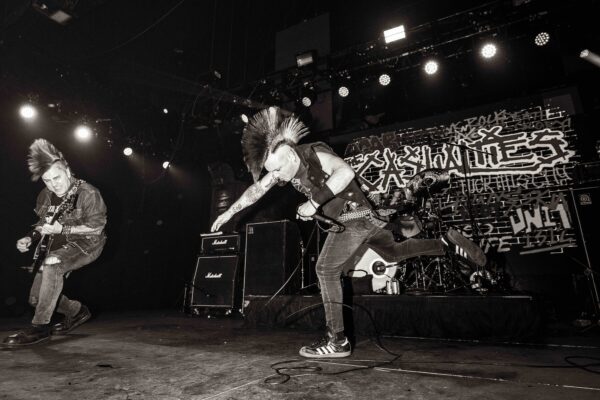
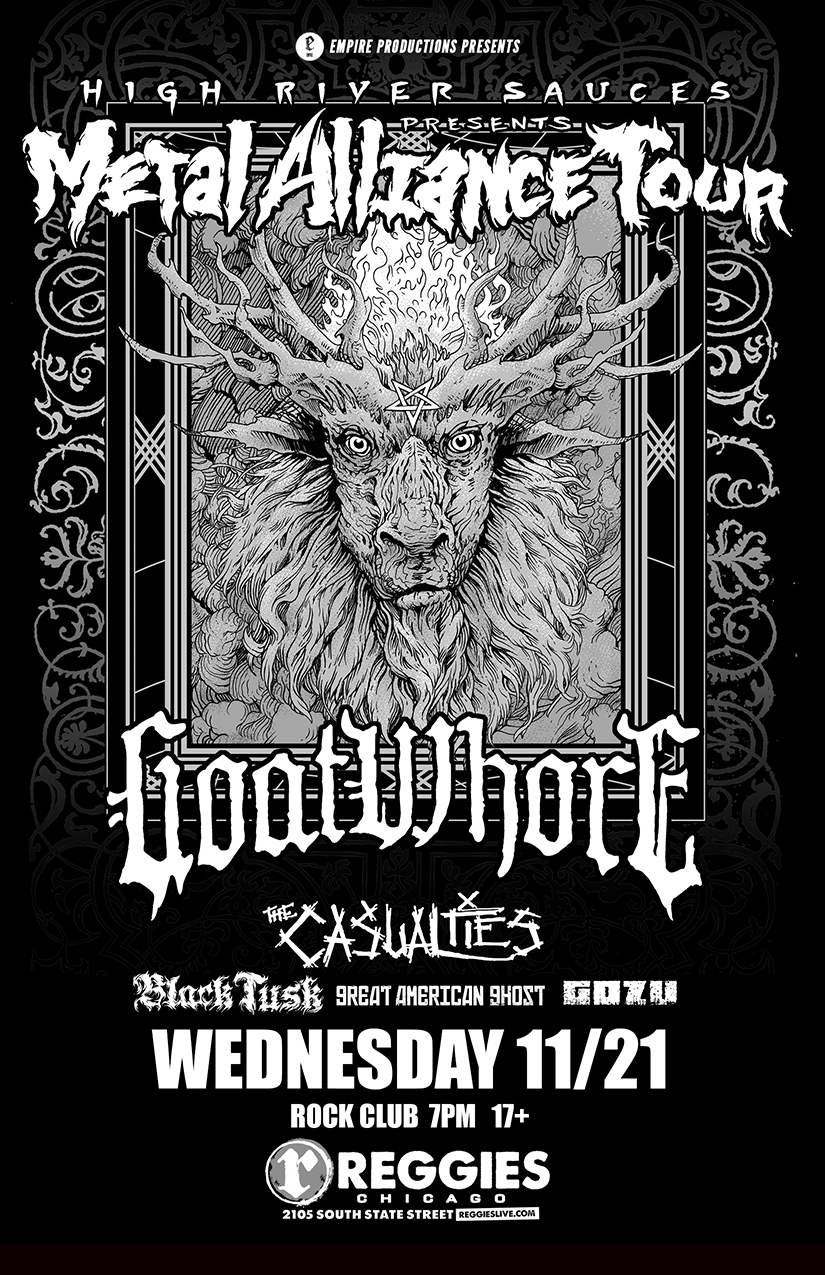
THE CASUALTIES
THE CASUALTIES
Politics. Hatred. Endless war. We doomscroll as our rights are stripped away. Bombings.
Kidnappings. Mass shootings. The nightly news is a litany of brutality. Assassination.
Subjugation. Deportation. We argue with each other while the rich get richer and cruelty
is normalized. These are just a few of the reasons why the title of The Casualties’ new
album is Detonate.
“It stems from being overloaded,” drummer Marc “Meggers” Eggers says. “You feel like
your head is about to explode, which I think is what everybody is feeling these days.
You’re pounced on day by day with terrible news and social media, and you just feel like
you’re going to snap.”
“Not too long ago, we were stuck in COVID,” guitarist Jake Kolatis adds. “Now we’re
trying to get back to normal life, and the world has gone crazy. There are continuous
wars and internal political battles here. Everybody’s tearing each other apart. Detonate
is saying we’re tired of all this division. With this record, we have a chance to say
something and promote some type of unity.”
Detonate is the second chapter in a new epoch for The Casualties. As their second
album with David Rodriguez at the mic, it solidifies the vocalist’s partnership with
Meggers and Kolatis. “It’s like a new era for the band,” Meggers says. “It solidifies that
Dave is here to stay.”
As the follow-up to 2018’s W ritten in Blood and their first record for Hellcat
Records—the Epitaph subsidiary curated by Tim Armstrong of Rancid—Detonate sees
this new version of The Casualties locking into place. “We were in the studio for W ritten
in Blood about eight months after I joined,” Rodriguez says. “With this new record, we
really grew together. For me, it’s the proud moment where we clicked the three Legos
together.”
“We’re really proud of this new record,” Meggers adds. “On the first record with a new
singer, you can get a little bit of leeway, but on the second record they’re really going to
judge you.”
With the unblinking eyes of the punk world on them, The Casualties pulled the blinds
and did what they do best. “There was a degree of pressure, but not from outside
sources,” Rodriguez says. “We just wanted to do the best record that we could that
honors The Casualties name and history without playing the same song over and over.
But it wasn’t that we even had to go out of our way. It felt natural to write this new
music.”
The title of Detonate’s first single, “People Over Power,” speaks for itself. “We’re getting
kind of smushed by the world, by government, by the bad news,” Rodriguez says. “We
want systemic change, total transformation, degradation to the state. ‘People over
Power’: It’s as simple as it sounds. You keep pushing, and something really bad is going
to happen that none of us want. We’ll burn it to the ground eventually.”
“It’s a protest song through and through,” Meggers says. “We want the vibe to be: You
listen, get angry, get your gang together, and get out on the streets.”
Speaking of the streets: “Brick by Brick” features a cameo from Agnostic Front guitarist
and all-around NYC legend Vinnie Stigma doing some spoken word. “His voice is the
embodiment of New York City, the Lower East Side, where the Casualties are originally
from,” Kolatis points out. “So, it made all the sense in the world to have him do that. But
just having him on there was fun because we’re great friends with Agnostic Front.”
“The song has a very New York hardcore kind of sound to it, so I knew Vinnie would be
perfect,” Meggers says. “Agnostic Front just happened to be in LA two days after we
came up with the idea, so Jake and our engineer went down to the show and gave
Vinnie the lines to record. It just fell into place.”
Native American punk band 1876 contribute guest vocals and percussion on “Ashes of
War.” “As long as I’ve been listening, I’ve felt like The Casualties always spoke up for
people in society that didn’t have as loud of a voice,” Rodriguez says. “The Casualties
have always had some Spanish in songs, but it just seemed like such an important time
to have loud Native voices. You don’t hear it that often. We were out on the road with
1876, and the more we spoke together, the more we really found out.”
1876 flew down from their home base in Portland, Oregon, to perform on the track.
“Their sacred drum had to be out in the sun—it was a whole ritual,” Rodriguez explains.
“It was a very serious moment.”
Meanwhile, “Pigs on Fire” is a trilingual track sung partly in Spanish, partly in English,
and partly in Portuguese. “My dad was very involved in the Chicano movement, and my
wife is Brazilian,” Rodriguez says. “When I would go down to Brazil, I would see another
side of what’s going on. Just like the United States, it was colonized and had a large
slave trade. And a lot of people don’t realize that it’s the only South American country
that doesn’t speak Spanish. It was another piece of the puzzle to speak loud for voices
that aren’t as loud as the mainstream voices.”
In fact, Rodriguez visited Brazil right before The Casualties recorded the album. “When I
was down there, I kept seeing this graffiti: ‘Set the fascists on fire,’” he says. “I thought
that was such a cool line. I took my notebook everywhere I would go and I just put the
pieces together. I would listen to some news that was going on here and news that was
going on in Brazil, and it came together with some really cool imagery.”
“Because it’s in Spanish, English and Portuguese, it’s in the languages that Chicanos
and Latinos speak,” he adds. “It’s about us coming together against the powers that be.
But for the people that don’t understand, we’re just telling them it’s a barbecue song.”
Ultimately, Detonate amplifies the punk ethos that The Casualties have embodied since
1990: A raised fist in the face of oppression. “I want people to feel empowered when
they hear this record,” Rodriguez says. “I want them to feel like they have a voice. I
want them to feel like they’re with like-minded people when they come to a Casualties
show. They can be themselves and not watch the show but be part of the
show—scream with us, jump off the stage. We want them to feel like they’re part of
something.”
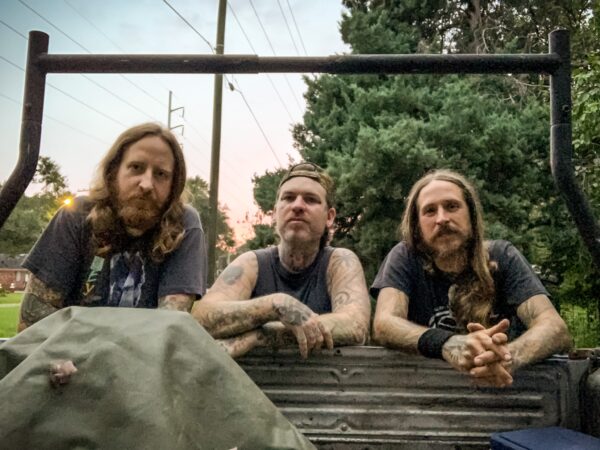
BLACK TUSK
Black Tusk was born from sweat. There was blood, and maybe a few tears, too, but more than anything, it was sweat that marked the earliest years of Savannah, Georgia’s Black Tusk. Formed in 2005 by three lifelong friends—bassist Jonathan Athon, guitarist Andrew Fidler, and drummer James May—the band welded together what they called “swamp metal.”
Photo credit Geoff Johnson
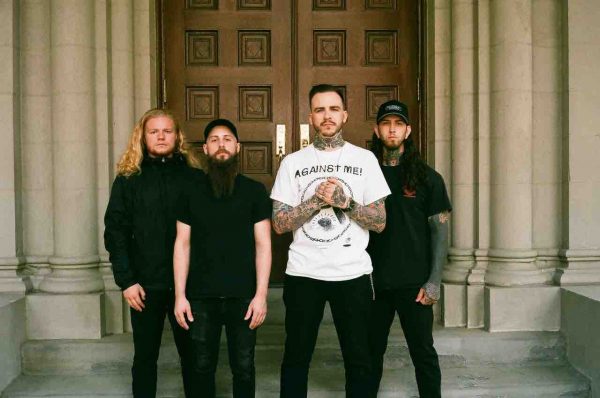
GREAT AMERICAN GHOST
Boston’s harshest and most furious export, Great American Ghost, will release their self-titled manifesto in March 2013. This initial offering, poignant yet violent, angry yet intelligent, solidifies Great American Ghost as the bastard children of the Boston hardcore scene. Recorded and produced by Jay Mass (Defeater, HH, TF) Great American Ghost unleashes a sadistic explosion of anger and thrash.

GOZU
This is Gozu’s world, we’re just living in it. Given that it has been five years since the Boston quartet dropped themonstrous Equilibrium, returning with Remedy is one hell of a way to make sure that everyone — whether previously familiar with them or otherwise — realizes that they are perhaps the most badass of American rock bands, for they have taken everything to the next level.